
10 min readBy Sourabh Shukla, Founder
One idea, two valid architectures
A SaaS marketplace can be implemented as a startup-friendly monorepo or as an enterprise multi-service platform. The right answer depends on team size, operational maturity, compliance, and expected scale.
Why both outputs are correct
FLOWiGANTT does not force one stack. It adjusts recommendations based on your selected planning mode and constraints so architecture matches delivery capacity.
- Solo: lower ops overhead, faster iteration, fewer moving parts
- Enterprise: clearer service boundaries, governance, and scaling controls
- Both keep reasoning explicit so tradeoffs are transparent
Choose startup or enterprise mode
Set Startup Mode or Enterprise Mode on the home idea form when you submit — before evaluation runs. That choice shapes architecture detail and complexity from the beginning.
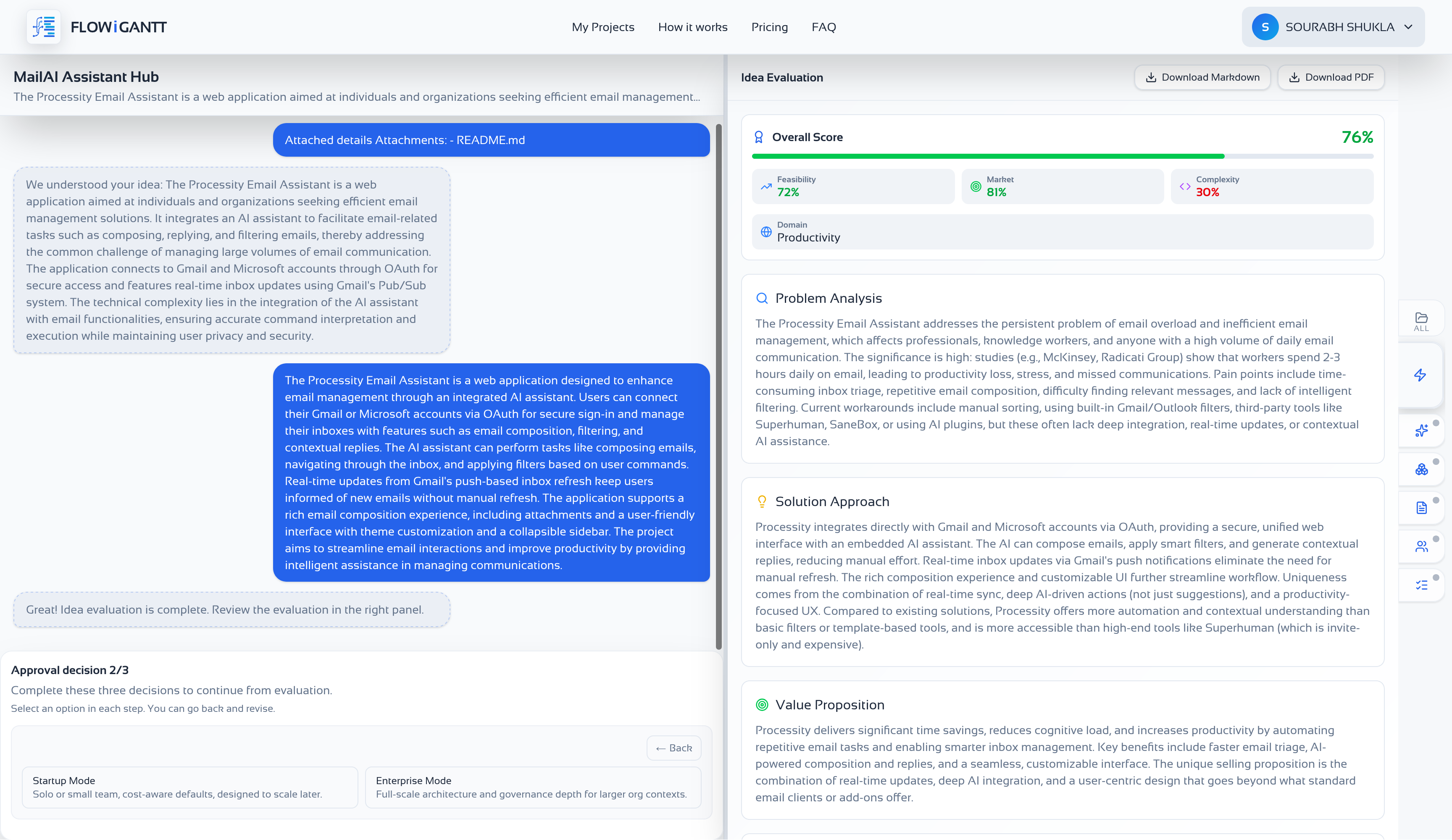
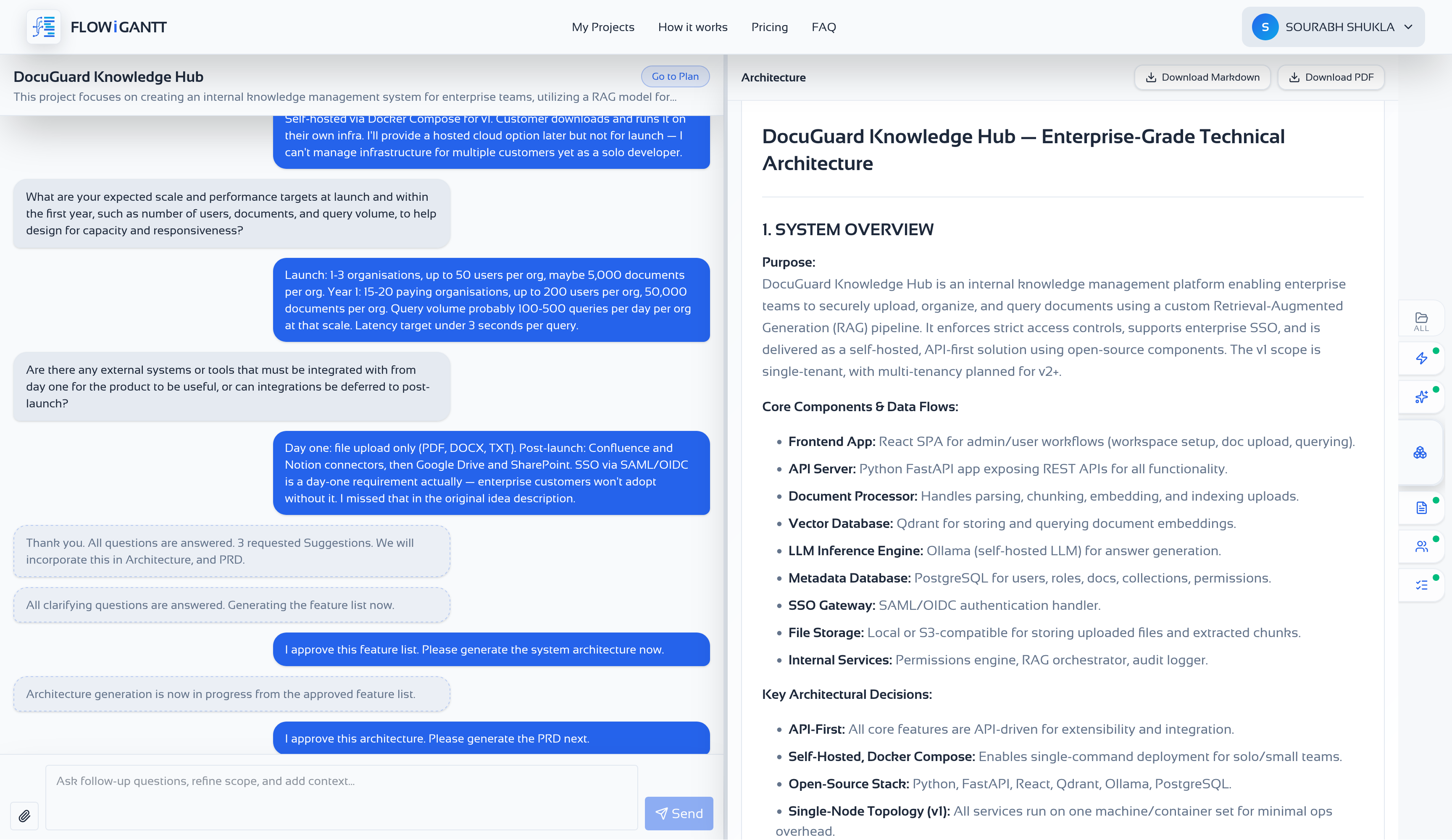
Compare architecture outputs side by side
For the same product idea, review infra, repo strategy, service boundaries, and deployment model differences.
- Solo example: Railway, modular monorepo, shared data services
- Enterprise example: AWS-managed services, microservices, multi-repo controls
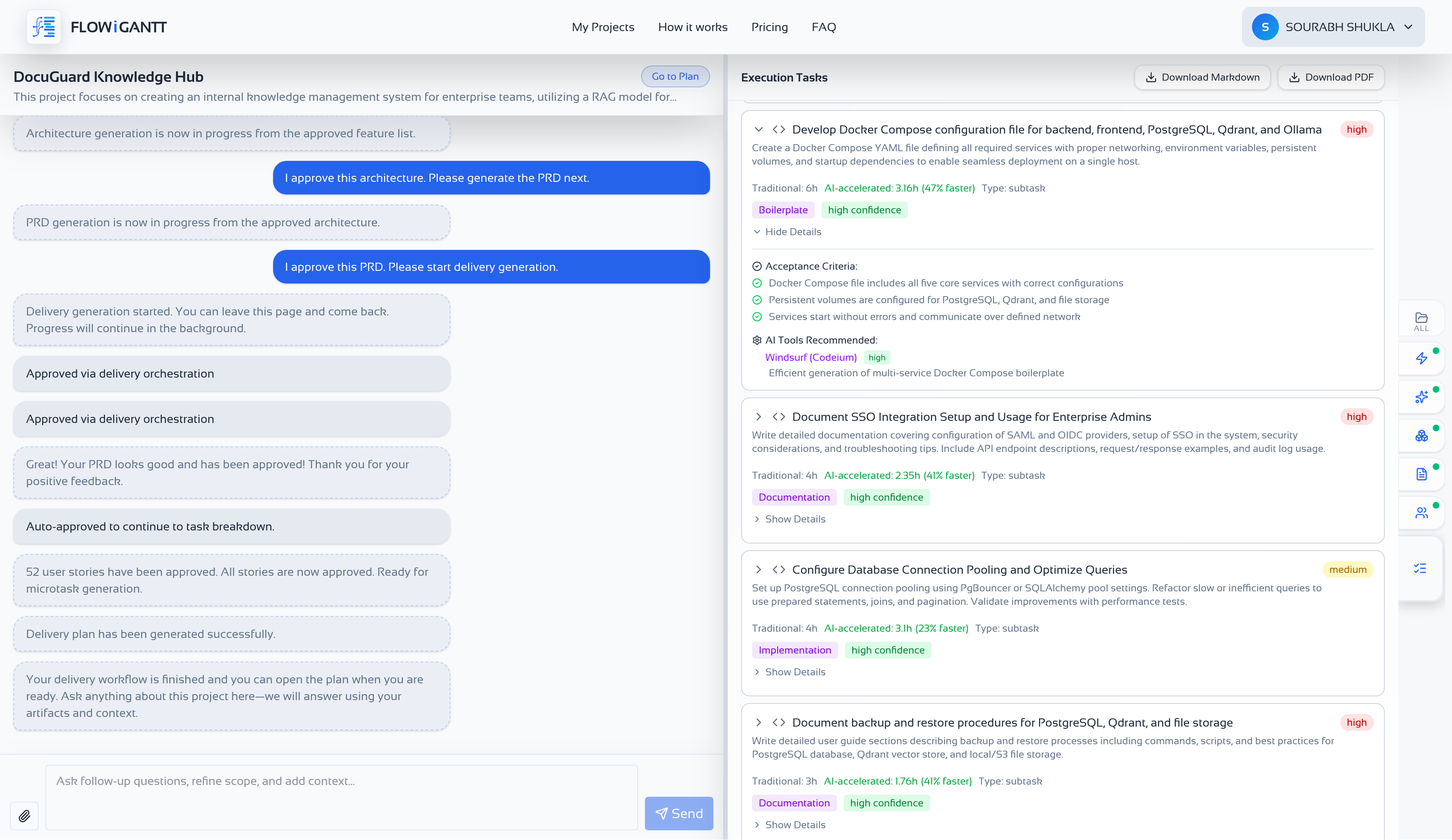
See task cascade from architecture choices
Architecture is not isolated. It directly changes PRD complexity, task granularity, timelines, and AI acceleration assumptions.
Prompting with mode-aware context
Scenario: Implement order and payment workflow
Build order and payment services for a SaaS marketplace with best practices.Using @architecture-{projectId}.md:Implement the order flow according to the selected mode:- Startup Mode: modular monolith, shared Postgres, single deploy target.- Enterprise mode: service boundaries, async events, and observability requirements.Then align endpoints and acceptance criteria with @prd-{projectId}.md.Next steps
Run your own idea through both modes to compare total complexity, then pick the path that fits your team now.
Recommended file set
- architecture-{projectId}.md - compare mode-specific infrastructure and boundaries
- prd-{projectId}.md - keeps behavior consistent across architecture variants
- tasks-{projectId}.md - shows how architecture choices reshape implementation work