
8 min readBy Sourabh Shukla, Founder
Institutional knowledge decays in 2-3 years
Teams evolve. Engineers leave. Documents drift. New hires inherit code without the decision context that shaped it. The result is expensive rediscovery, repeated mistakes, and slow execution.
The hidden cost of lost reasoning
When the "why" disappears, teams spend cycles reverse-engineering constraints from commit history and tribal memory.
- Onboarding slows because architecture intent is fragmented
- Refactors accidentally break assumptions that were never documented
- Roadmap commitments slip due to avoidable rediscovery work
Capture reasoning at plan creation time
FLOWiGANTT records evaluation decisions, architecture tradeoffs, PRD intent, and tasks in a linked sequence before implementation begins.
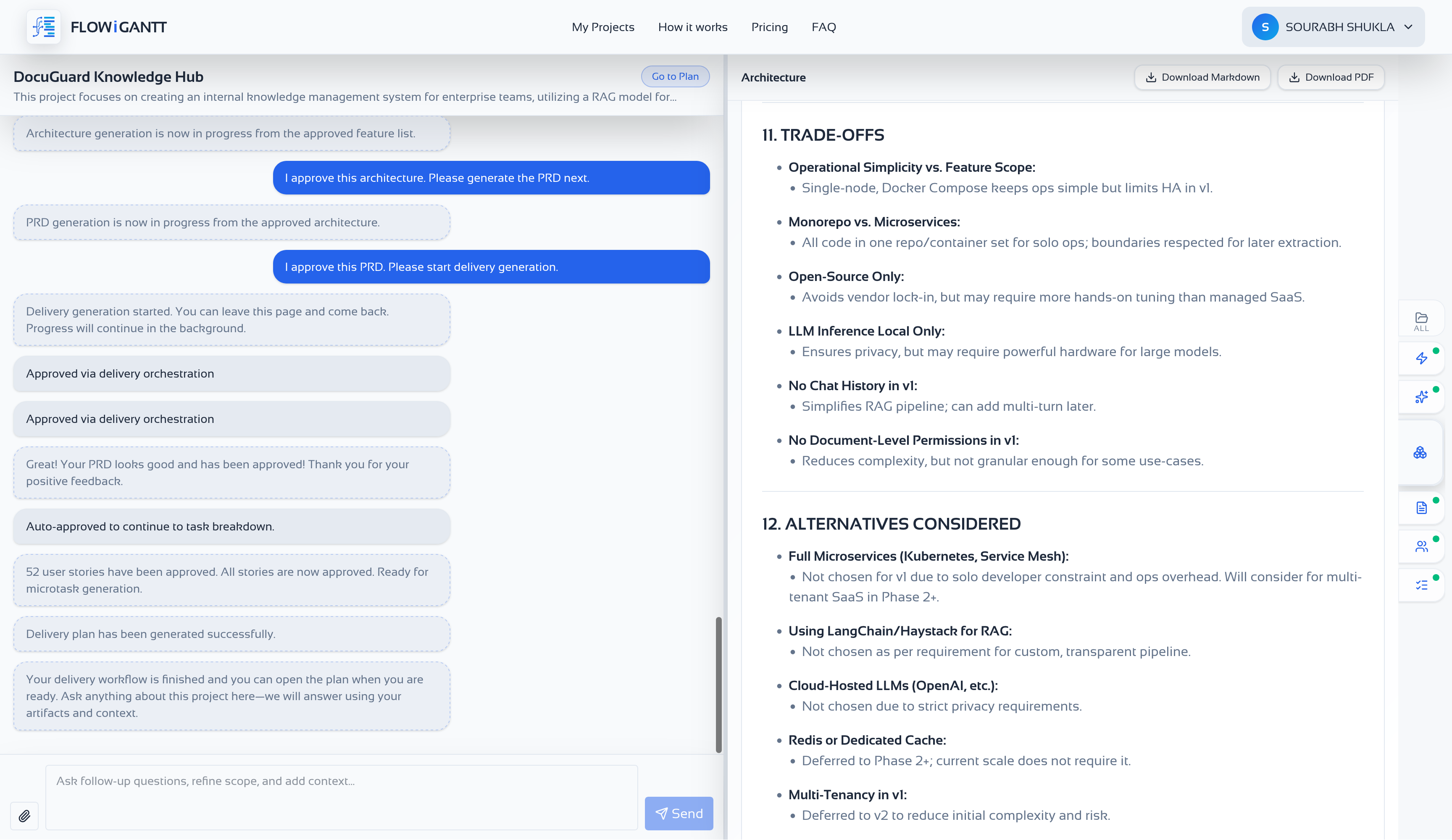
Preserve context in durable Markdown assets
Export assets and keep them in your repo so every engineer and AI assistant can access the same baseline context.
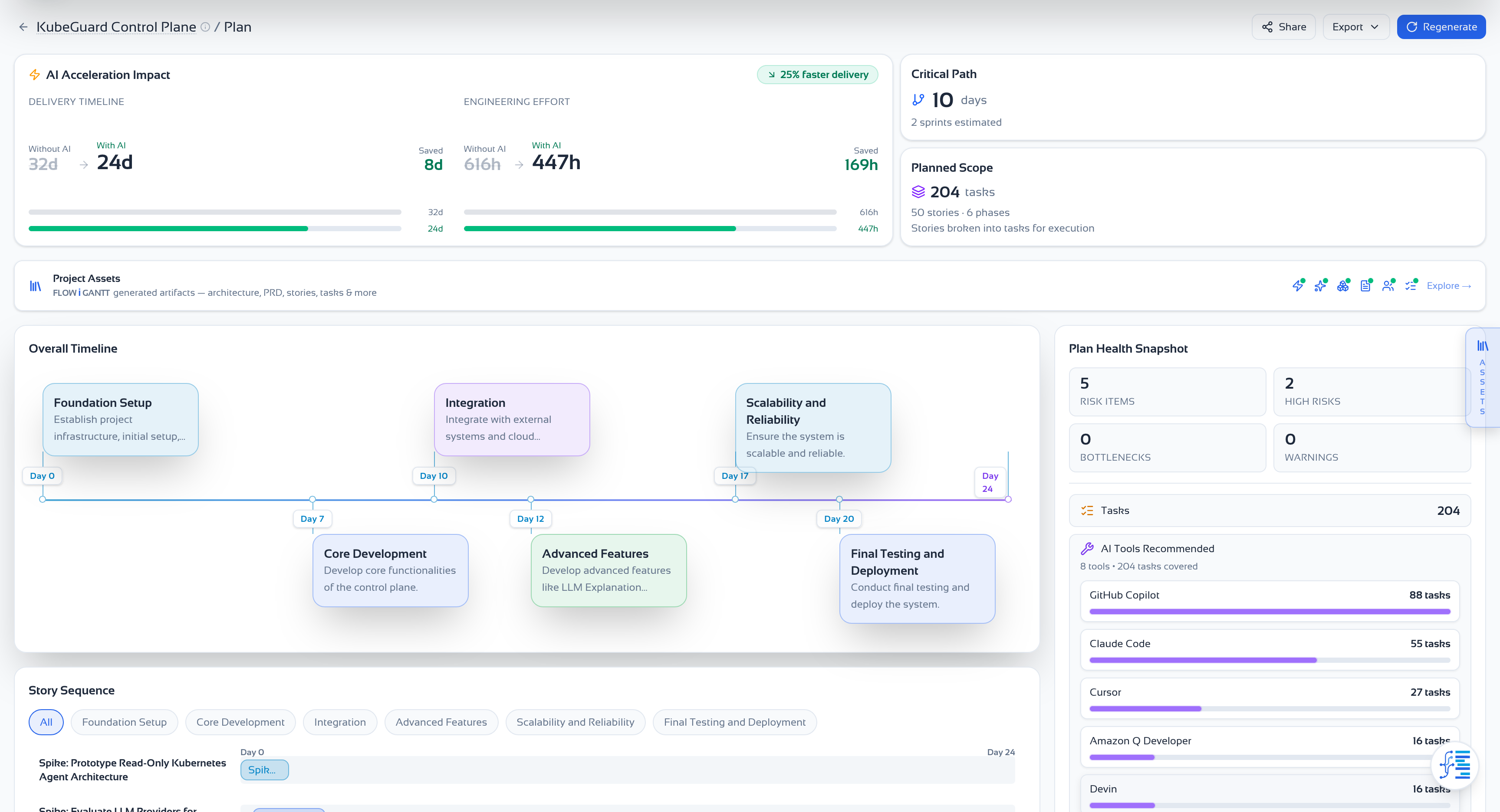
Put preserved context to work as the project evolves
The context captured at planning time pays off every time the project changes — a new hire joins, an architecture decision needs revisiting, or a release needs scoping against existing constraints. Context committed to your repo means the reasoning is always one file open away.
- Revisit original decisions before changing architecture
- Scope releases against existing constraints with less guesswork
- Onboard new contributors with linked plan artifacts
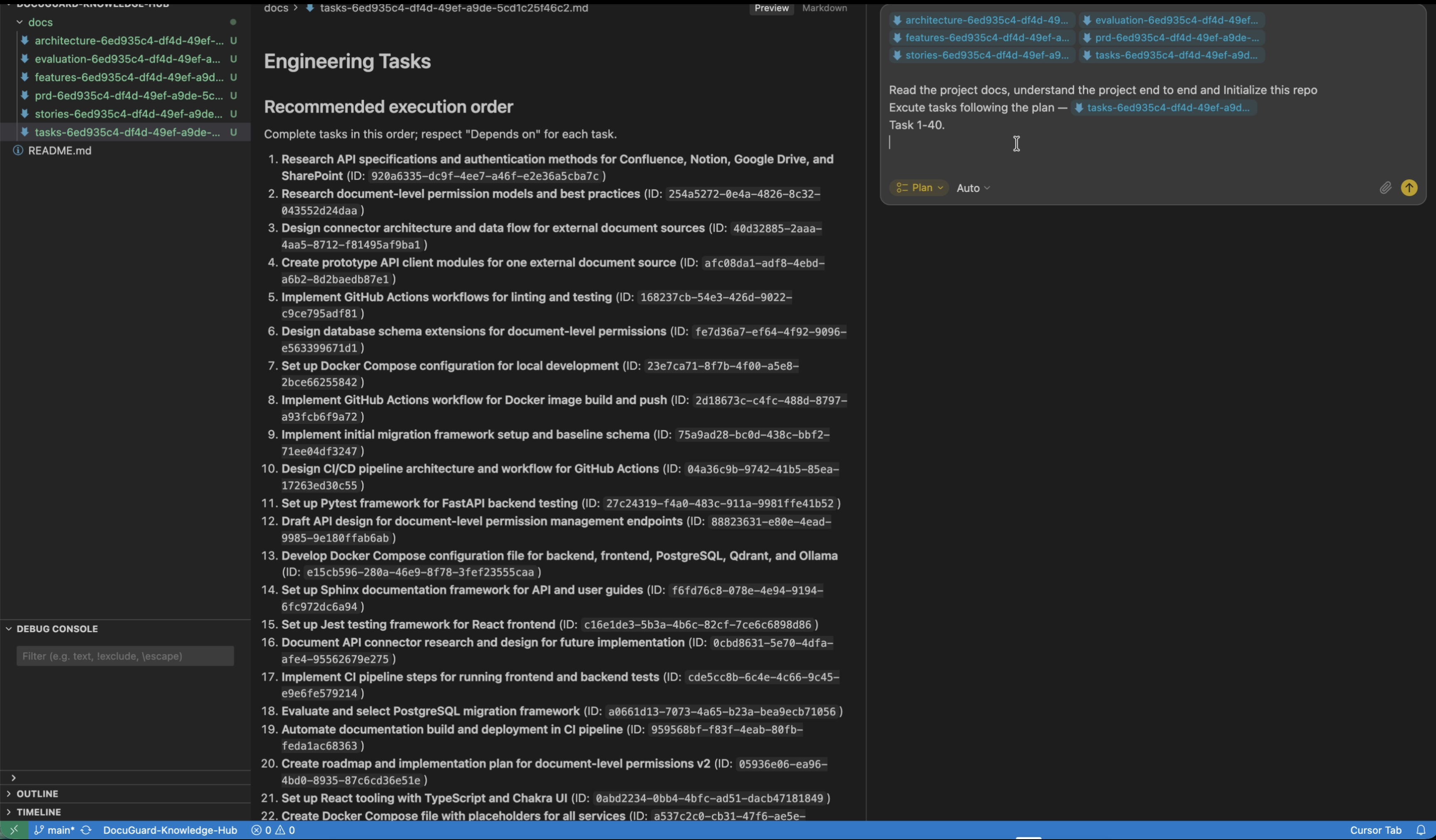
Prompting with preserved institutional knowledge
Scenario: Refactor event processing module
Refactor the event processing module to improve reliability and maintainability.Using @architecture-{projectId}.md and @tasks-{projectId}.md:Refactor event processing while preserving existing ordering guarantees and retry semantics.Use the original tradeoff notes as constraints and keep compatibility with the documented API contract.Map changes to the related task acceptance criteria before proposing code edits.Next steps
Treat planning artifacts as institutional memory, not temporary documents. This keeps product intent and architecture continuity intact as teams change.
Recommended file set
- architecture-{projectId}.md - decision rationale and tradeoff history
- prd-{projectId}.md - product intent and expected outcomes
- tasks-{projectId}.md - implementation context tied to architecture